In Conversation with Keith Fullerton Whitman
August 2025
Keith Fullerton Whitman: I made all these kind of chronologically appropriate notes about like, what the milieu in 2005 was and what we were all up to back then. 'Cause it feels like this reissue is perfectly timed for exactly twenty years of that tape, so it's kind of a nice... Without getting too deep into the, like, the inside baseball aspects of, you know, reminiscing. [laughs] So, let's talk about 2005, just where everybody was in the world, and the scene, and the general tone of then, just to get things started. So, Jessica, you were in Reading, right?
Jessica Piper: Yeah, Spencer was in Cincinnati. I was in Reading, just north of Boston. But yeah, 2005 for me was a big year 'cause that's when I really started touring and I think I played 105 shows that year.
K F W: Whoa. That is insane thinking about that now, the amount of energy that is. So that's averaging two shows a week for the entire year. That's nuts.
J P: Yes.
K F W: Yeah. I mean, largely because there was a way to do that, because there was a pretty keyed-in scene of people that were willing to receive folks from anywhere, right? That's the narrative here – is that we had this amazing thing, which I'm sure still exists in a certain way now, but maybe less, I mean, for lack of a better word, promiscuous. Like, we could just show up [laughs] in like a completely random town and there would be a person there, or a group of people that were willing to set up a show. For noise, it's pretty incredible that was a thing, you know?
C. Spencer Yeh: I like to think I played my part in Southwest Ohio and sort of opening that up, becoming another option to route. It used to be like in Ohio people would just cut across the top. They'd hit Cleveland, then they'd go over to Detroit and then Chicago from there or something like that.
J P: Yeah Spencer, you had that little corridor between Detroit, Cincinnati and Lexington. It was really cool.
C S Y: Yeah, I got to know all those mugs down in Lex, like 2001-ish, something like that. Like, shortly after I started like figuring out how to book shows.
K F W: Yeah. Columbus also. It was fun! All of this touring was predicated on routes and like nearest neighbor cities that were viable, you know? I always think about this as kind of all pre-internet. Like, how did we all know each other back then? Like, in Boston we would show up at gigs and that's how we all met each other. There were record stores then, so we kind of knew each other's work through records and that whole thing. But it seems crazy, not crazy, but incredible that there was this way to kind of just magically know who was where, you know? And to connect with each other. Like, how did we do this thing? How did we do this like 20 years ago? Touring?
C S Y: I had first met you, Jessica, when you were on tour with (John) Wiese and Ron Lessard. And I knew about RRRecords when I was in college. So when I moved back to Cincinnati I continued to mail order from Lessard. So I sort of knew about, like, Beaulieu, and was sort of piecing together just the whole deal around RRR. And I was never a person to really strike up any correspondence or dialogue, because when I was younger I thought artists just didn't wanna hear from anyone.
K F W: [laughs]
C S Y: But I mean long story short, really what kind of cracked things open for me was Manny Theiner. As soon as he started hearing that there was some kid, or young adult, in Cincinnati booking shows, I would just be getting phone calls.
K F W: So it was more of an internal network of promoters and organizers that way. Yeah, yeah. That makes so much more sense.
J P: Definitely pre-internet as we know it now. But to that point I started booking shows at Jacques' I think in '98. And at that time, it was still a lot of phone calls. And I was calling people and I would get these long distance bills. It was kind of crazy.
K F W: Long distance as a concept is so incredible when you think about it now. There is no equivalent to long distance. It's just, you know, you call… You can call overseas, I guess, but I mean, domestically – this idea that it was like a prize. If you had to call Washington DC it would be like $20.
J P: Yeah, it's interesting, things definitely changed, and by the 2000s it was much more common to have [an] email address and to email with people. But, you know, at Jacques' we had...I remember when Wolf Eyes came through. And that was one of the first like touring noise bands I saw. They played in the basement. And I think they were friends with Jonah Rapino, or some of Jonah's friends, I'm not really sure. And like the Bullroarer guys had done some touring, but that was more like noise rock you know? And so, I knew all the Providence, you know, like Lightning Bolt and all those, we were booking them like all the time.
But again, it was a slightly different scene. And so when I really kind of dedicated to noise the first few years we didn't get that many touring bands coming through Boston. We would have shows in Boston, we'd have shows in Providence, and that was mostly it. So I thought about this a lot, like how did these networks grow and one of the standout things was the Phi-Phenomena Tour in 2003 that Kyle Lapidus helped organize, but that had people from all over, including OvO came from Italy to play that somehow.
But that kinda set the format of, like, ten bands, ten minutes each, like mandatory short sets. And that was, like, "Oh, this works for noise shows." 'Cause, you know, there had been way too many of these really ultra-long things. And Ron Lessard and Jason Lescalleet had also done a “10-by-10” project at the Berwick where they did ten improvisations with ten artists. But the Phi-Phenomena definitely, 'cause that connected, I think, some people. I think there were some Columbus people on that, right? And from, like, further out, further field and I had this really funny experience, like... [sighs]
It might be almost ten years ago now, but I finally met Suzy Poling, who I'd never talked to before. And it was just really funny. She had done a lot of touring, but she only made it out east to, like, Columbus, you know? She hadn't really come to Boston. And meanwhile I knew people who had made it to Columbus, and didn't go any further west. So, you know, that, 'cause she was touring, I think 2003, it was a little bit earlier. It was crazy – like, we knew all of the same people, but we were better friends with, like, the other people, if that makes sense.
K F W: Yeah. Well, let's be honest, though, Jessica. Boston was definitely the “final boss” of touring. Like, it absolutely was the most impossible place to get responsibility. You know, to get somebody to be like, "I will commit to you arriving at this time, to having warm food available to you, to having a place for you to stay after the show." Nobody really carried that torch. It was just not a thing. We had the Middle East, we had TT’s, we had that tier of venues, but it was inaccessible to any of us really.
J P: That was inaccessible, but I don't think it was because we were mean-spirited. It was just a lack of resources. It was...yeah, a desperate lifestyle. [laughs
K F W: Exactly. Yeah, I think it was, like, a conscious shutdown,, we would reach out the olive branch to all these places but nobody really took the bait. So the stuff you did at Jacque's was crucial, I think. I saw so many incredible things that would have never happened at TT's or Middle East. I saw Harry Pussy there one year and they played upstairs and it was, like, dovetailing with the cabaret and it was one of the most amazing, magical things.
J P: Was that the show when Donald got on stage and unplugged the amp and he was like, "You're done."
K F W: I think so, yeah, yeah. There was definitely, like, a scuffle at one point, but it just adds to the allure of it, how amazing that was, you know? And the crowd perfectly – it was like a Sadie Hawkins dance – there was like the noise people on one side and the cabaret people on the other side. And by the end, everybody was mingling and talking. It was like, “thank God.” It was real.
J P: That night is one of my biggest regrets 'cause I walked by Jacques' and I saw the marquee and I was like, "Oh, I think they're local. I'll see them next time." Such a mistake. And so to tie back to some of the stuff we were talking about earlier about these touring routes, there was really interesting community not only geographically, but also different types of music, you know? There was, like, the free improv scene and there was the power electronics and there was the harsh noise and there was the noise rock and there was the, like, probably some other stuff that I'm not thinking about. But there were a lot of different scenes. And I think another thing that really helped with the touring was No Fun Fest. When that started happening then everyone met each other. We were all in the same place, and could meet face to face.
And also the INC (International Noise Conference). Like, one thing I remember was being in Baltimore and I think it was Angela from Taiwan Deth who was there. And she had been to INC that year and she had the printed program with a list of bands. And she'd written a one-word review of every band in pencil next to their name. And I was like, this is amazing. Look at all these bands. I wanna hear all these bands. It was so exciting.
C S Y: I just wanted to note also, I think it was 2002 was the first DeStijl/Freedom From Festival, which I feel like Carlos Giffoni actually sort of took inspiration from that and started No Fun. 'Cause, like, separately, because of all the different shows I was organizing everything was sort of un-siloed. Because it was through Manny where I booked Bhob Rainy and Greg and Axel Doerner and Andrea Neumann. And first met them. And then subsequently, they both toured through in separate projects. You know, Greg with Heathen Shame and Bahab with Nicole Bindler and Chris Cooper. And everyone was that year slowly making their way to Minneapolis St. Paul for this fest. And like, I remember, like, talking with the Hair Police. And they're like, "Yeah, we're playing this fest, but like, don't know who all these bands are." You know, which included, like, Tom Carter and Christina and, like Son of Earth, you know? You know, it was just, like, a real collection of people.
K F W: It's interesting how, like, sonically on paper none of that stuff really seems like it comes from the same place.
C S Y: Yeah. But it totally makes sense now.
K F W: When you look at it under the umbrella of the underground, so to speak, whatever we called it back then, you know? Just like the circuit of people. Like, everyone that was working in a specific finite area of music was definitely curious about all the stuff outside of it. Like, there was really less gatekeeping in this way, you know? Like, Tom Carter setting up a noise show doesn't surprise me. Of course, he's a music nut, you know.
C S Y: Mm-hmm, mm-hmm
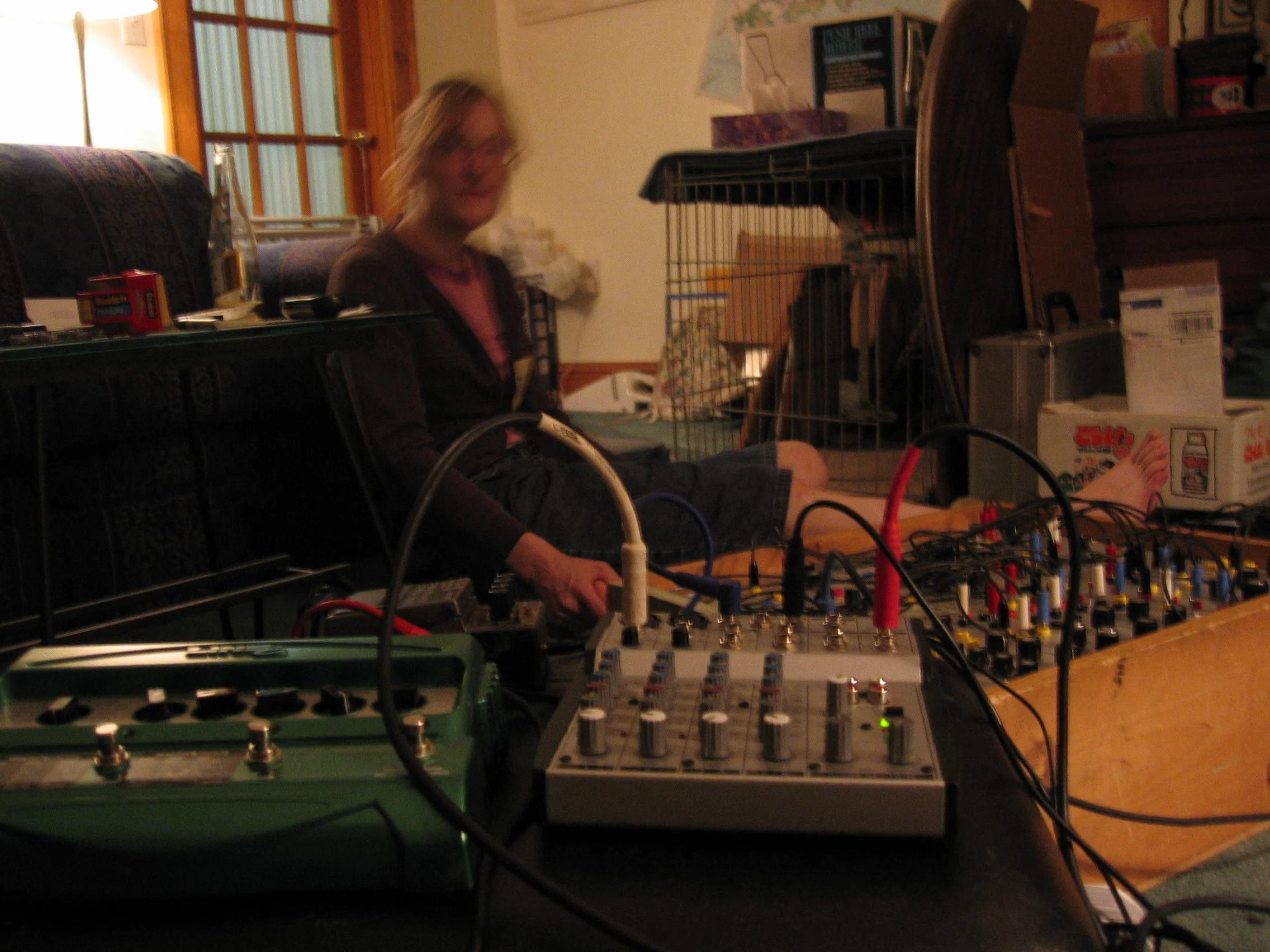
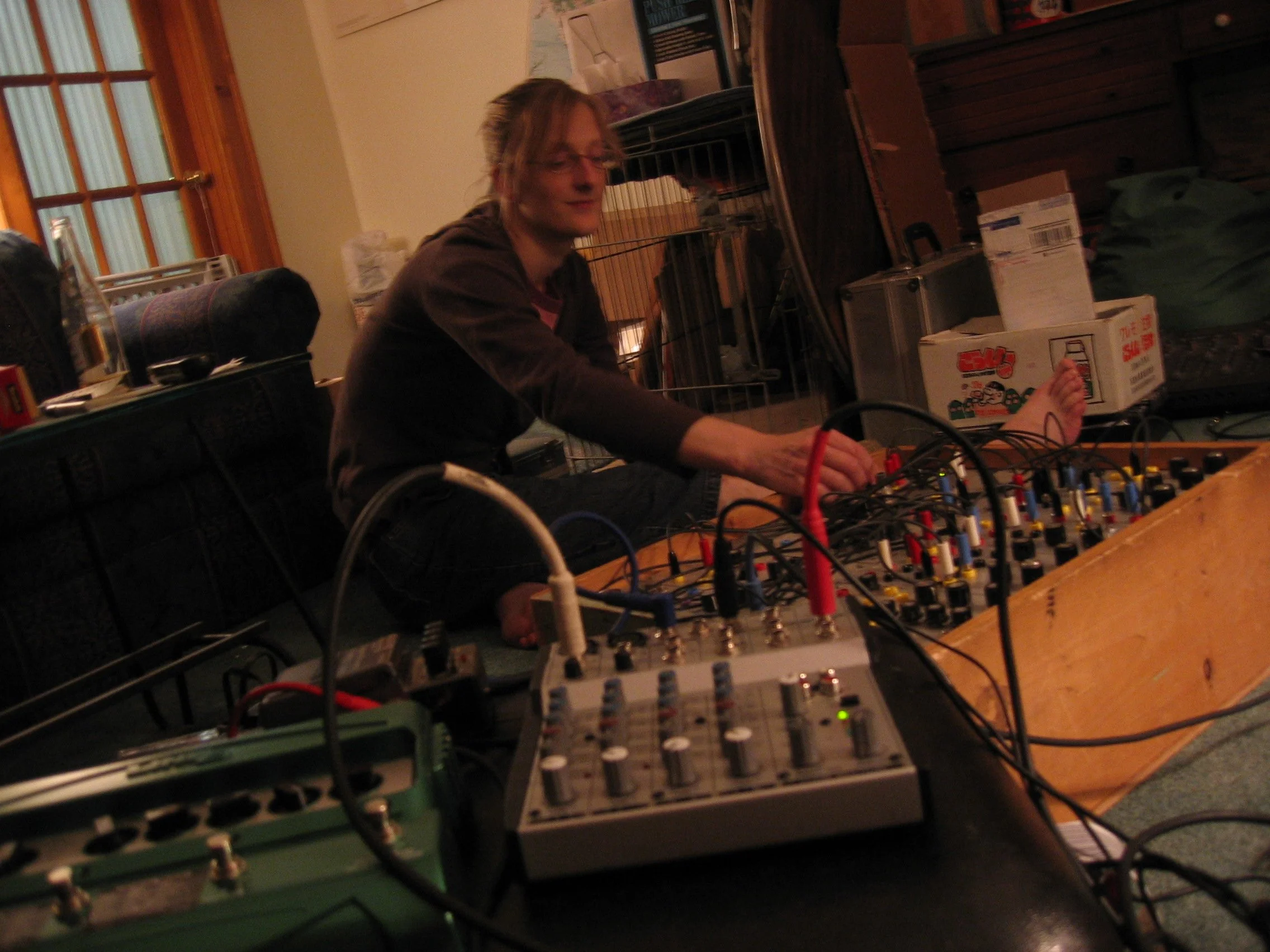
K F W: So Flower (Electronics) was... You were running it out of that s- it was like a loft in Charlestown or somewhere, right? Around 2005, 2006?
J P: W- No, no. I was living at my parents' house. I started there. It was the fall of 2006. And then I moved to Center for Advanced Visual Studies at MIT. And so I was there until sometime in like 2009. Then I moved to Charlestown for like-or no. Was it Charlestown or it was, um-
K F W: It was like Sullivan Square out there or somewhere. I remember I came and visited you there once.
J P: Yeah, I was out there only for about six or eight months, and then I went to California.
K F W: Oh, so it was right after that. But you were making...you had the Little Boy Blue and what was the other one? The pink one?
J P: Jealous Heart.
K F W: Those were your flagships. And you were cranking 'em out, as I remember. There was like a couple of you in there just soldering those things around the- But you had other people like soldering and doing, like, circuit board, you know population and just shipping the things, right?
J P: Oh, yeah. I think we made...well, so we made a hundred Jealous Hearts and about 400 Little Boy Blues.
K F W: That's incredible. That's so many, especially for handmade electronics, I mean.
J P: It was, it was awesome. It was super fun. I mean, I loved it. And I hated to quit it, but you know, I got into grad school and I was like, "I only get one chance at this. I gotta focus. I can't do both."
K F W: Of course. No, no, it makes perfect sense. I was thinking a lot about, like, there weren't that many people making boutique noise electronics.
C S Y: Wonder if I should dig this out. Somewhere back in there, you know, nicely stored, I have a Little Boy Blue, but I also have, Jessica, what you called the power electronics synthesizer, which I think-
J P: Oh, the White Face one?
C S Y: Yeah, the White Face synth. Yeah, it’s back there. It still works, I think.
J P: Yeah. Wow. That's awesome.
C S Y: 'Cause it had, what you might call it, the pegs on the side where you could wear it like a guitar, right? And I remember you described it as a power electronic synthesizer because all it does is go [imitates synth resounding]. You know?
K F W: [laughs]
J P: [imitates synth resounding]
K F W: That was a great approximation of like- several decades of music. [laughs]
J P: Yeah. [laughs] That was a fun time in life. I worked all day long on that thing and then finally finished it. And Lightning Bolt was playing down the street from the loft I lived in. And I had it in this little tote bag that was like an advertisement for Range Rover. [laughs] And I walked down the street and Lightning Bolt was setting up, and I was like, "hey, guys, can I play for a few minutes before you start?" And they're like, "Okay, sure."
K F W: [laughs]
J P: And so I just plugged into their amps and I started playing that thing. And then Brian just got impatient and started playing. And then everyone knocked the table over and just...it went crazy. It was awesome. It was amazing. I mean, I hadn't eaten, I don't think, the entire day. But that's how I was living at that time. I mean, that must be, must be 2003. No, 2002 'cause I moved out of that loft in 2003, so I don't know. It was uh...I can't live that way anymore.
K F W: I mean, you can. You just know better. [laughs] We can all live... We can all throw caution to the wind and not think about, you know, what our next meal is gonna be or, you know.
J P: That's true.
K F W: I love this narrative of like you wake up in the morning and you build a finite thing, in this case an instrument, you know? And you know what needs to be done. It's like you have your pile of capacitors and resistors and you just build it. It's like you know what it's gonna be. But it takes so much time and focus and activity of just testing everything and making sure the bridges are all good, you know? It's amazing. It's such a beautiful thing to do with your time. And then you take this fully fleshed-out idea, which is your composition basically. Like your piece.
And then you hand it to someone, you'd be like, "do with this what you want to do." And it'll probably be different, you know? It's such a great physically transferable concept of music, and I've always really loved that about instrument designers and builders. 'Cause your instruments are so specialized, Jessica. They're so based in, like, this really great concept of, especially the banana jack stuff, of just, like, multiplying and reusing and all this – the building blocks of electronic music, you know?
I mean, coming outta that, like, David Tudor thing of just, like, throwing a bunch of stuff at the wall and seeing what sticks. I mean, it's such a cool– was a cool thing, you know?
And obviously, this energy these days is kind of transferred over a little bit into like the Eurorack thing and the guitar pedals and all that. But it's... I don't know. It just feels like the waters are kind of dirty these days. There's so much out there and it's hard to disambiguate the really interesting, visionary stuff from just the stuff that's like a clone of something that already exists, just with marketing behind it.
J P: Yeah. It's been a barrier to just even trying to understand what's going on or get involved now.
K F W: Is there a desire to, to get back into it in some way, to get back into playing and doing all this stuff again or...?
J P: Something is gonna happen. So, I'm calling you guys from my office. I've been renting an office for like a year and a half now. I have an electronic studio again, which is the first time in a long time. And I'm figuring out what that's gonna look like. I'm a little intimidated to go back to the synthesizer market 'cause it's just changed so much. It's like I don't even know it anymore.
I'm kind of looking at pedals right now, guitar pedals. Which is less personal. So in a way, it's easier to do. But that's been pretty fun. It's interesting. And I'm approaching it in a different way now 'cause having gone to school and getting a PhD, it's like I can work in a completely different way than I did when I was younger. And I understand the technical part a lot better.
I hadn't been doing any circuits or anything for like ten years, and I was just like, "I really miss this part of life." You know, or playing music. I really haven't been playing music at all, and it's been difficult to get started again. Well, the difficulty is, like, comparing in your mind what you used to be able to do to what you could do now, you know? And I try to play guitar and I'm like, "I can't play anymore." It's real frustrating.
K F W: The muscle memory is probably there, but the agility goes away, you know. But the thought's there, like, the thought process, the hand-eye coordination if you want to call it that, those things never fade. They're just there.
J P: And the listening, yeah.
K F W: Yeah, the listening, of course, yeah.
C S Y: Also, like, a number of years ago I started having these thoughts about, like, if I were to still be doing this at, like, 60 or something. Like, what do I wanna look like [laughs] on stage? What do I wanna be doing at that point? You know what I mean? And to sort of slowly plan ahead and try to shift the conversation around your work. I mean, you know, there's multiple ways to do that.
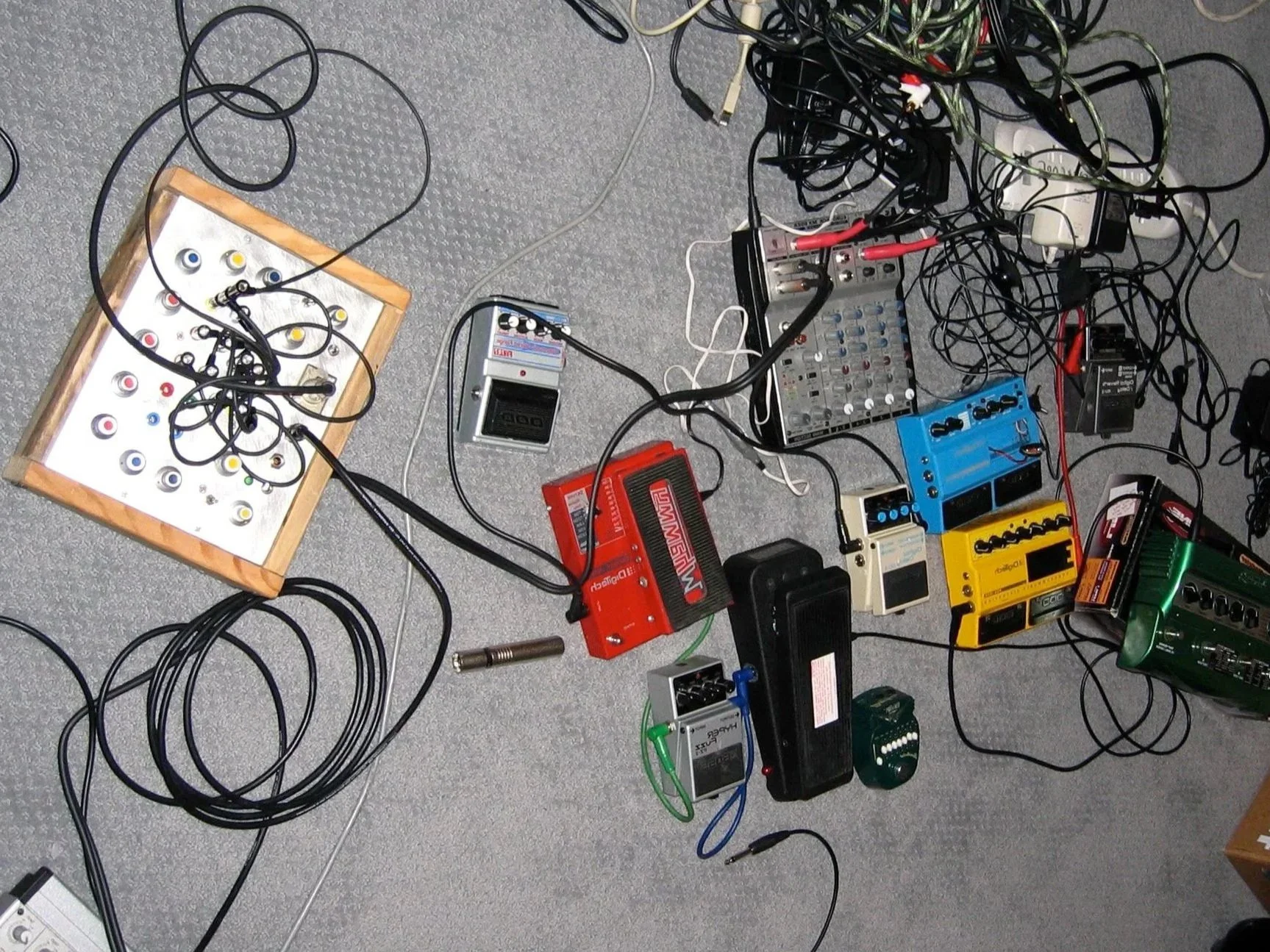
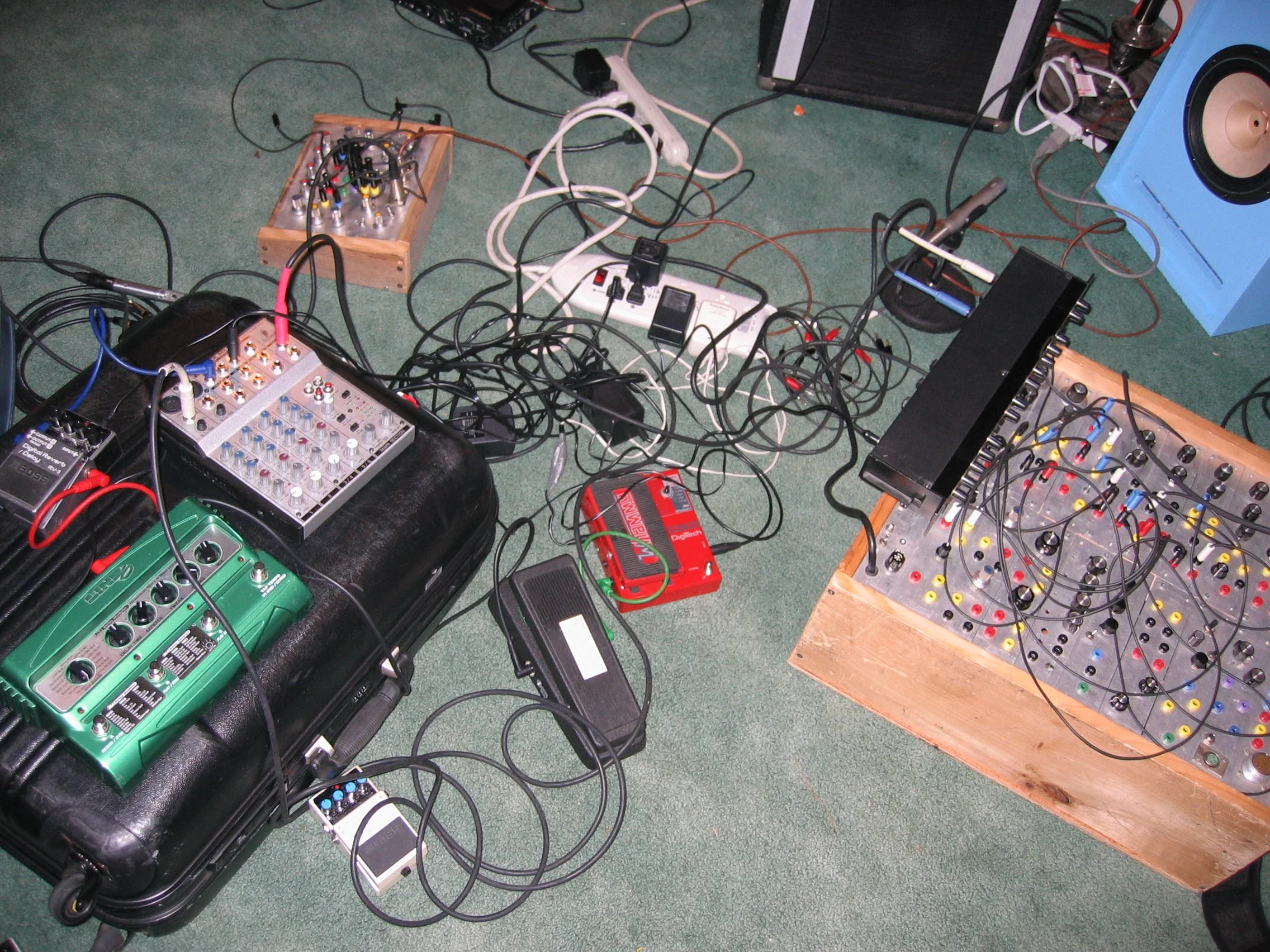
K F W: Jessica, how would you describe CAN’T? There's kind of this narrative and then there's kind of this sound with it. But yeah, I mean, I think myself and a lot of other people were really just sort of taken by like, the uniqueness of what was going on, right? 'Cause it's like, how would you describe what you were trying to do? It is what it is?
J P: [laughs] It was what it was. Yeah. It was what it was. I was strategic in some aspects of what I was doing, but in other ways, not at all. One thing that I just was unable to do is to think about like, what is this gonna look like from the audience side? How is this gonna read? And I remember playing this show in Belgium that was on a big stage and there was probably 200 people there, and I was just like, "I have no business being up here. I have no idea what the hell's going on. I just can't think of, like… I don't know how to fill the time." I don't know how to like re-center myself if I get off track.
And that was something that I really admired about, well, definitely like Wolf Eyes was really, to go back to them, that was one of the first noise bands I saw that really, from my perspective, were very informed by like pro-rock touring, you know?
Like, I remember seeing them show up and they had all their merch in bins and they're pulling it up, but they also had like, they knew what they were gonna look like onstage. They had both the sound and the visual part. And those are both really important in that kind of entertainment, right?
And then, Spencer, what struck me with your work was the focus. Like you had a lot of really informed, at least the way that I read it, from the improvisation community. And like this, deep focus in listening and responsiveness in your playing, especially with other people. But also you did a lot of improvisation, but also had like planning for like structure stuff, right? But you always seem, to me, like, way more prepared. I always felt, like... completely unprepared when I played, and it was really stressful. [laughs]
C S Y: [laughs] That's funny 'cause I identify with a lot of what you're talking about because to me, I feel like it's actually only in the last year or so where I figured out a solo set where I finally do actually have options. [laughs] And I also have the internal dialogue to just, like, give myself a moment and listen and recenter instead of feeling like, almost as if you woke up and all this shit's in front of you, right? [laughs] And you're just like, "What's happening?" You know, "What am I..." Stuff like that, you know? Yes. I mean, I definitely can identify with a lot of that. I mean, I appreciate the words. It's a funny thing, you know?
K F W: This is interesting 'cause I think of a band like Wolf Eyes as like they had, like, a set that they played. And they would go on tour and they'd play 80 shows with exactly the same three things, you know? Nate would have this, John would have sax and this. When it was Aaron, it would be his thing. But they did not change what that thing was, you know? Maybe every year or two they would regroup and they'd get some new thing, and that would be in addition to the sound. But it was like what they did from night to night was pretty much set, right?
Jessica, I saw you play at least a dozen times back in the day, and I don't think I ever saw you do the same thing twice.
J P: [laughs]
K F W: Ever. Like, it was spoken word nights. It was karaoke and others. It was noise. It was acapella singing. You played acoustic guitar a couple times. And that, that thing, whatever you wanna call that, it was what was so great, you know? Because whatever the context was, you would do completely the opposite thing. If it was an all-black t-shirt tablecore thing, you would go completely in the other direction. And it was intentional and it was, for lack of a better word, it was the most punk approach you could have possibly taken in those settings. I mean, you weren't fucking with people.
J P: [laughs] No, definitely, no, definitely not. So, like, the very last tour in the US was the Total Confusion Recreation Tour, which was with Suffering Bastard, Door, Naomi, and Two Dead Sluts.
Suffering Bastard was so loud. I mean, it was louder than Lightning Bolt. It was just retarded, there was no other word for it. And I was like, "I can't play noise at the show. It makes no sense." And that's the one where I just did acoustic guitar with no amp in the corner. And I did that at all the shows. I mean, so I did have sets and I would do, like, when I was touring, usually I would do the same thing every night. And, and that got more formulaic, especially like later in 2006 and, and 2007. And that became a problem itself. But I really liked that tour, playing those acoustic songs. And the sad thing is I never recorded any of them.
K F W: That's a bummer 'cause it was some of my favorite things you did because it was like, talk about playing against type, you know? Like, you [laughs] you would show up to these things that were so laden with that sort of doom energy, you know, and do exactly what you do. I mean, people were terrified. I saw people in the audience that were like, "I don't know how to react to this. This is the most transgressive thing you could possibly do." You know to be emotive or whatever, you know, anything. Like, anything other than just, like, table-gazing.
J P: I mean, when it worked it was... it was awesome. Like I remember playing in New Brunswick. That was a crazy town. Like, New Brunswick and Allentown were two just like real, just drunken party towns- like nihilistic.
K F W: Really hard luck, you know? Like, like great scenes but just not a lot of opportunities for people in those places, so.
J P: Yeah, and New Brunswick, they're getting shut down with noise complaints all the time. And it was terrible. But I mean, it was cool to do these noise shows and all these, like, nihilistic, angry, like, drunken people. And then be like, "Hey, now I'm gonna sing a love song." I was able to get people's attention and it was...when it worked, it was like the coolest thing in the world. I just felt, like, so special.
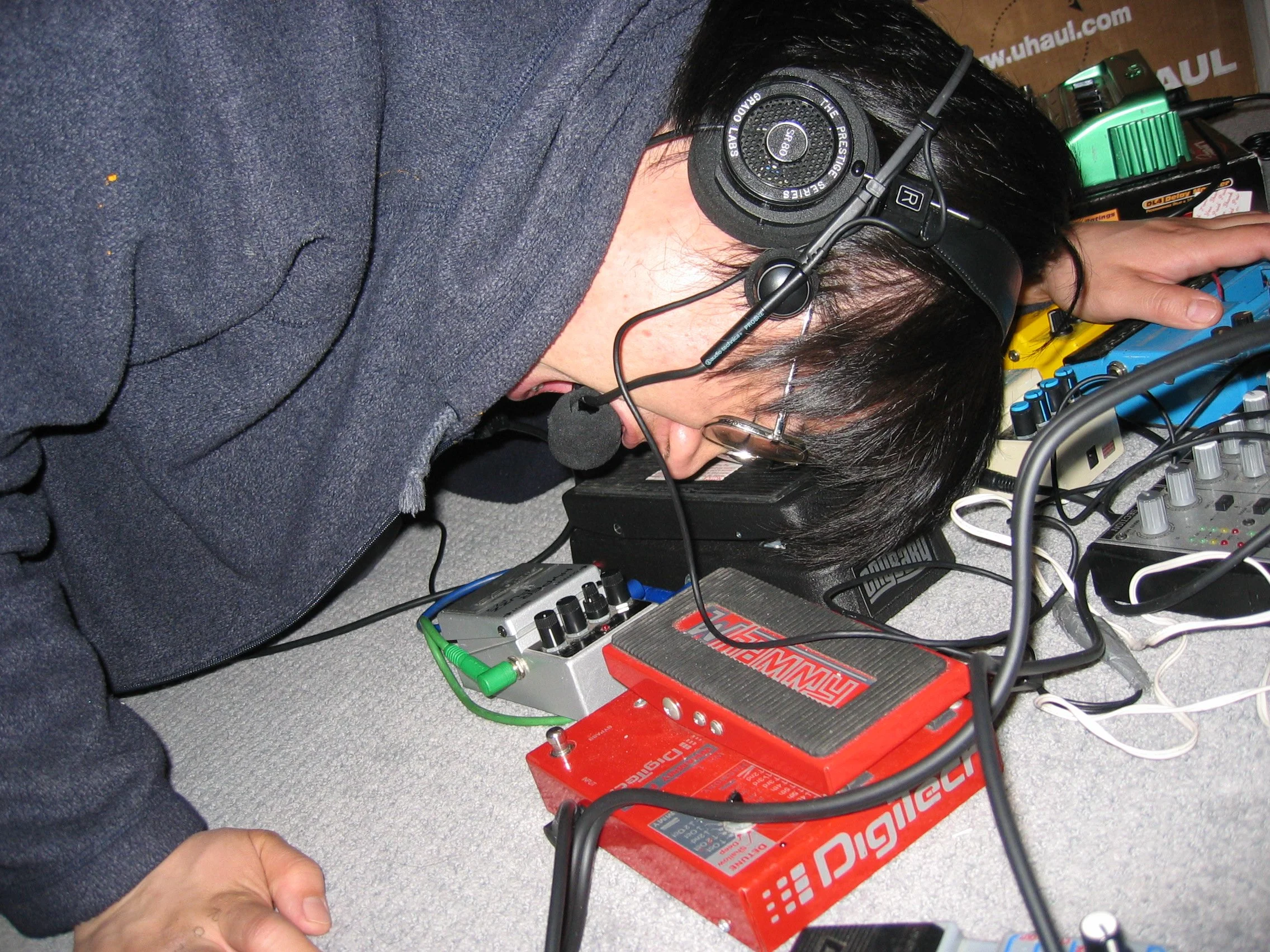
C S Y: I don't know if you still have a copy of this, but I remember in Cincinnati, I helped you put together a multi-disc CAN’T box.
J P: Yeah, yeah, yeah. It was right before I went to England. And I put together...it was sort of like a CAN’T retrospective. It had five CDs, including one that was not released previously. Yeah, you helped me a lot with that. I brought them all to England and Europe and sold them all.
C S Y: I hope someone still has those out there. Maybe that, that does kind of, like, place things because maybe it was a time where you felt like you were sort of like, you know, not totally retire CAN’T, but like, you were kinda wanting to, like, do more Jessica stuff.
K F W: Yeah, what is the distinction between the two? I always wondered about that.
J P: I don't know. It was hard to, it was hard to keep a distinction, unfortunately. But, I mean, before CAN’T, I was doing singer-songwriter stuff where I played bass and sang. And I always was trying to find a drummer to play with, but I could never find anybody that like understood what I was doing, which was literally just, like, pretend I'm playing a guitar. And just, what would you do like the Spinaenz or something, you know?
But somehow, because it was a bass, it was just too confusing for people. And so, I decided I wanted to do something else. And I was in Neptune, also, around the same time. I joined Neptune. I was playing bass.
K F W: You played bass in Neptune. I remember. I think I saw you one time with those guys playing bass. Yeah.
J P: Yeah. I mean, I was only in Neptune maybe, like, a year or a year and a half. Maybe two years. '97 to '99. And then CAN’T started in '99. Or I guess '98, maybe, I did the first show. But that was for just electronics. And originally, that was the only thing. It was like, okay, this is just for my electronic stuff that I'm doing. I was doing it, like, while I was at art school, at Bard.
But I never had a clear distinction, that was something I had a hard time clarifying in my mind. Which was Jessica Rylan, which was CAN’T. And also, at some times, it was Jessica Rylan CAN’T. Like some of the earlier shows were billed like that. So there really wasn't a clear distinction.
K F W: Did you even have a different way of thinking about it? Was it like a preparation thing or just a context thing?
J P: No, it was more a context, I guess I would say. Because I wasn't like consciously keeping some stuff separate for like one thing or the other.
K F W: All three of us all did that. We all had monikers. There were ways to disassociate the art from the artist, right? That was kind of like the, the greater idea there, you know? And then we all just like shed the thing after we got comfortable enough. It really, for me, was about comfort. It was like, okay...I can just shed the artifice and then just have it be you know, the person that's essentially driving the thing. I mean, I think that was just, it was of the milieu of that time, like we all did it, you know?
We all had something that we could-... I mean, we strove to keep the thing mysterious - that was the idea, right? It was like this thing could exist whether we had anything to do with it or not. It was an idea. And the idea couldn't have different names, right? So we just like put it out there.
And that thing probably still has a life of its own. You know, now we've we all kind of go back and forth between using the names, but-
I don't think people really do that as much anymore. In the age of social media and whatnot, it's like, and it has to instantly trace back to a person, you know? But we all were like really swept up in that idea of having it be this like separate consciousness, you know?
I still love that. I'm very nostalgic for that idea of it being like, you could have a self-sustaining, you know, life form that was not necessarily you, you know? You were, in the work, you were feeding into it, but it was like it had a life of its own, you know?
C S Y: Yeah. Yeah. I just feel a little bit like bummed about like spending years fighting that. As a result something else happened which, like, you fight yourself. You fight that, and then you fight yourself fighting that. I mean, I don't know any other multiverse result. [laughs]
K F W: Yeah, yeah. Well maybe what happened was, we all just figured out a way to love ourselves. [laughs]
J P: [laughs]
C S Y: [laughs] Whoa, I mean… That's it right there.
K F W: Mixed results on my side.
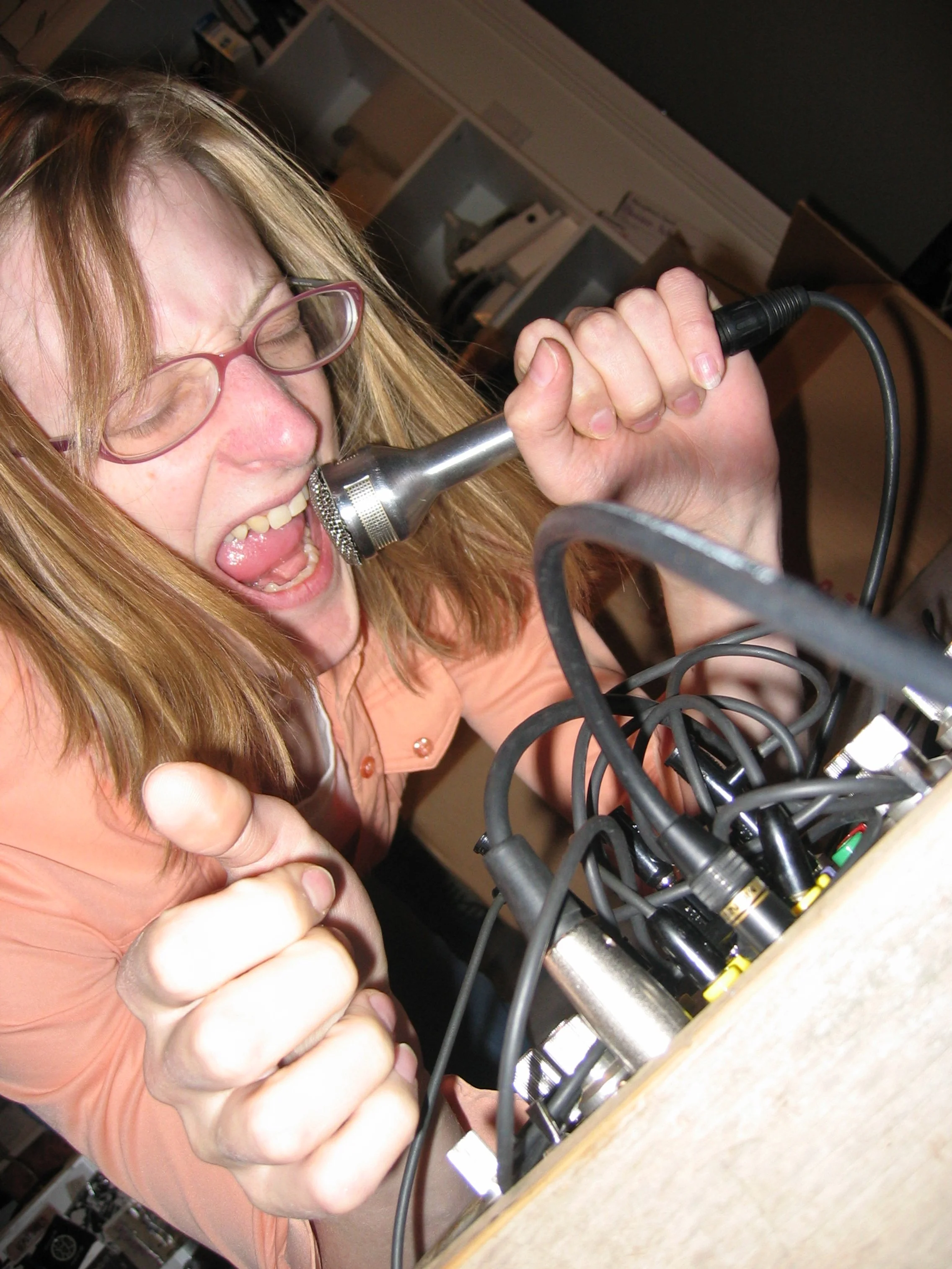
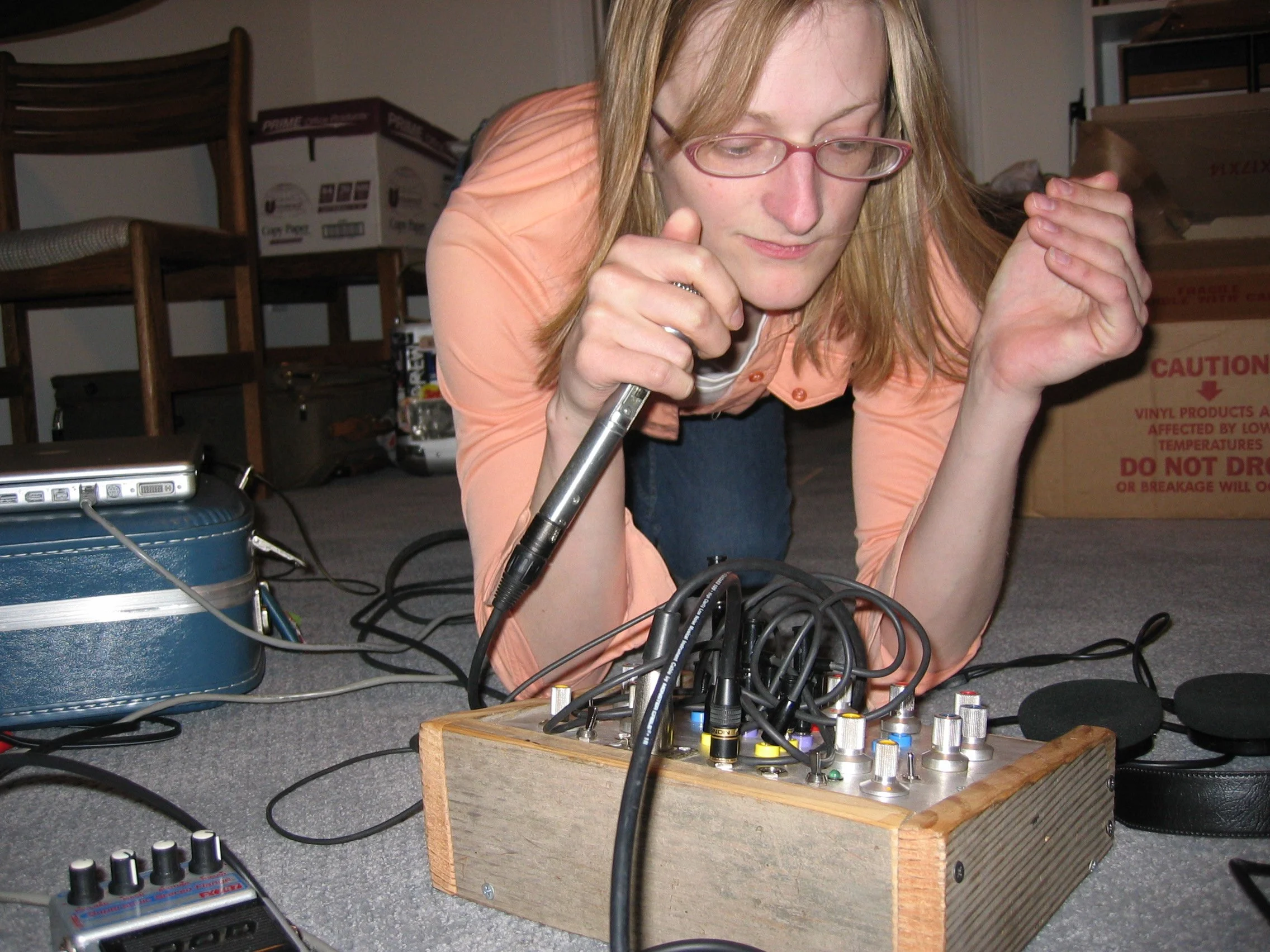
C S Y: Jessica, I don't know if you remember this, but when we were recording in Cincinnati, we had kind of like a loose compositional plan about trying to do more song-ish sort of things. And I forget what the issue was, but we did like, probably like half an hour and like had all these really great pieces. But the four-track just didn't record. I was like doing a lot more loops and you were doing vocals. It was like the more overtly like song-ish sort of side of the collabo and it just didn't record. I don't know if it was like hyper crushing, but it was just sort of like...you know how it is. It's like, well, try go back and try to recreate, but it's kinda not-...not the same vibe. So I just wanted to mention that. As like, you know alongside, alongside the existing four sides that we do have years later.
K F W: So the thing that's being reissued here is essentially that tape, right? The Drone Disco tape. You set up and you recorded in person?
J P: Yeah, we recorded in Cincinnati and then like a month or so later, Spencer came out to Boston and we recorded in Reading. Yeah, in-person collaboration.
C S Y: Yeah, both sessions in person, yeah, yeah. There was the one synth in Reading. I forget the name of it, but it was the drone synth. And I don't think it ever, like, became anything that you made more than one of, but that features heavily in the LP. And I also have this other memory. I think you had to go take care of some stuff and I was just sitting with the thing and I actually ended up recording some source material that I used for some Burning Star Core stuff later... you know, but I'm trying to remember what the name of this one synth was.
J P: What, what did it look like?
C S Y: Uh, it looked [laughs] like a box with switches on it. [laughs]
J P: Was it, um, wooden sides or was it all metal?
C S Y: I think it might've been all metal. It kind of seemed like it was one of those, like, like...it was designed to drone and it was designed-
J P: I think it was one...the bottom of the box was blue and then the top was white and it was kind of like two C-shaped pieces that went together. It was rectangular. And it had a few oscillators in it and it did some kinda inter-modulation. I don't think it had a filter.
C S Y: I don't know the term as well. But I just remember, like, when you tune it slowly, like, other layers would sort of appear and peel off of it.
J P: That's interesting, Spencer. I forget about which specific equipment we used. I would have had the personal synth with me. I'm certain of that 'cause I could hear it. Certain things that I know only that one does. I hear in the the first piece, Cincinnati Side A and then Reading Side B. I really like Reading Side B because that one is like...it starts out as almost the least successful and it's, like, confusing. And then it just gets really chaotic and all this stuff starts coming in and I love that part. I really enjoyed that.
C S Y: Yeah. I think. I remember it was in Cincinnati. I think I just had a lot of pedals and maybe like some signal generation. Might've been a little bit no input as well. Trying to remember. And also like you had the vocal and also running the vocal through just, uh, some aspect of a synth of yours. You know, it just made it like extra. Like, I don't know. Re-listening to it, especially the test pressing, you know, and the job that John Wiese did. Like, it's-... like, what was the word I was thinking of? It's like scary, kind of. Like-
J P: [laughs] There are some scary parts, yeah.
C S Y: It's, it's like really, like... What? Oh. Oh, I had a word. Ah. I don't remember it. I'll put it in there later.
J P: So, did you do vocals on it too? 'Cause it doesn't say you did vocals, but I think you might've done some vocals.
C S Y: It might've been just, like, just some kind of noise generating. I don't quite remember. But it really isn't apparent, you know?
J P: I see.
C S Y: You know, it's kinda interesting to me because especially or the time, like, just no violin at all, I think. You know, the idea was to go in and set up a situation that wouldn't have necessarily happened to a degree, without both of us. Although, I think I might've been looking towards some of the ideas that you were working through, you know, both as Jessica and as CAN’T. Both, like, the noisier sort of electronics with voice. But then also I remember you did a tape called like, literally what it says on the tin, Long Slow Changes. You remember that tape? Which, which was sort of, like, enough of this, like, blasts of this and that. You know, I'm gonna go for a more sort of a long, slow changes.
J P: Oh, yeah. Yeah. Now, I'm pretty sure the first time I saw you play in Boston, it was only violin. You did solo violin. And then, I remember...I think it was Burning Star Core played. It was some festival in, like, Atlanta or something.
C S Y: Yeah.
J P: And... But then later, I remember seeing you do a lot of shows with, like, vocals and processed vocals. But was that later on? So maybe you weren't doing the vocals as much at this time period.
C S Y: Yeah. Either that or it wasn't necessarily being, like, sort of pushed to the fore in this situation, you know? Yeah. I mean, it's interesting to me because I think about, like when, when people think about a collaboration, like, is it gonna, is it gonna be like when the peas touch the mashed potatoes and you push them together? Or is it gonna be like-You know, kind of something else. You know what I mean?
And I think I was really interested in figuring out how to, like, sort of dig into more than just sort of, well, you know, this is my equipment, this is your equipment. Let's put 'em alongside each other, you know?
J P: Yes. It's interesting listening to it 'cause there's certain things where I'm like it's very clear, I'm like, "Oh, yeah. I did that, and Spencer was doing that." And then there's other parts where it's like, we're basically doing the same thing, and I'm not sure who was doing it, you know? Where it's like a lot more, um, blended. You know?
It's not the peas and potatoes. It's like it became shepherd's pie [laughs]
C S Y: Yeah totally, there you go
J P: ...or something.